
A planning inspector hears Gleeson's appeal for up to 200 homes on Shortlands Farm, Ash, over eight days from 15 September. Councillors voted 13-0 that they would have refused it.
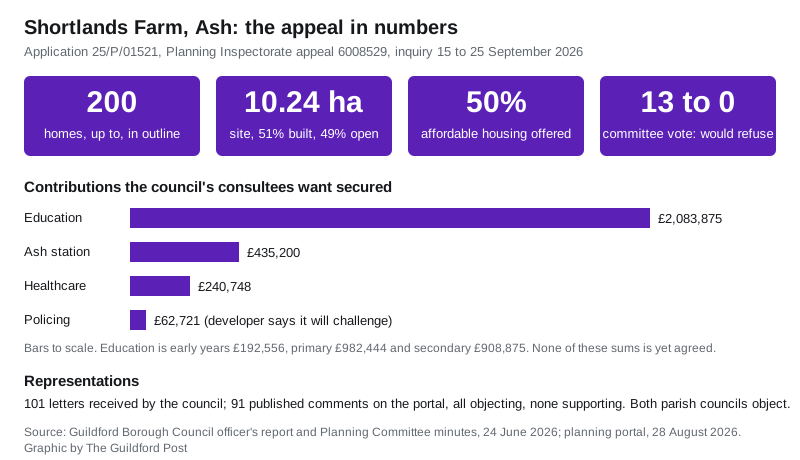
A public inquiry into plans for up to 200 homes at Shortlands Farm in Ash opens at 10am on Tuesday 15 September. Guildford Borough Council says it is expected to run for eight days: 15, 16, 17, 18, 22, 23, 24 and 25 September (Guildford Borough Council).
The inquiry is the biggest test yet of “grey belt” housing in the borough. It will not be livestreamed.
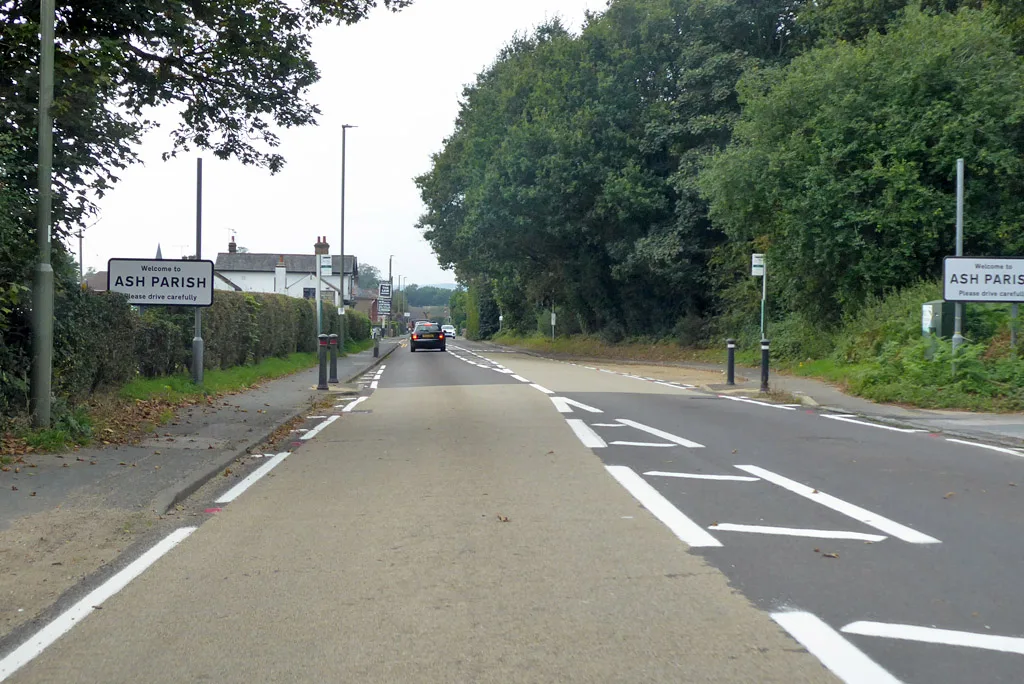
Ash is on the borough’s western edge, beside the boundary with Rushmoor and Aldershot. The site lies east of the village, on the south side of the A323 Guildford Road and west of Wyke Lane.
Why an inspector is deciding, not the council
Gleeson Land submitted the outline application, 25/P/01521, on 6 November 2025. The council’s 13-week deadline to decide it passed on 5 February 2026 without a decision. The developer then appealed to the Planning Inspectorate on the grounds of non-determination, which took the decision out of the council’s hands (Gleeson’s statement of case, dated 22 April 2026, on the appeal documents tab).
The Planning Inspectorate appeal reference is 6008529. Appeal documents are on the council’s planning portal under 25/P/01521/APL, where 118 files had been uploaded by 26 August, including the council’s proofs of evidence.
What is proposed
The application is in outline, with everything except the two accesses left for later approval. According to the officer’s report to the Planning Committee, the scheme covers:
- a site of about 10.24 hectares, with farm buildings and hardstanding in the middle and fields around them
- up to 200 homes, including affordable housing and self-build plots
- a development area of 5.23 hectares (51.1% of the site) and 5.01 hectares of open space (48.9%)
- a main vehicle access from Guildford Road and an emergency access onto Wyke Lane
- a public footpath crossing the site, which would be kept
- 50% affordable housing, which the council’s housing team supported
The council’s urban design officer described the density as 38.2 homes per hectare on the developable area and called it “contextually appropriate”, while asking for more justification of a three-storey flatted area (officer’s report, 24 June 2026).
The same land was refused in September 2017 for a larger scheme of 300 homes, 105 of them affordable, under application 17/P/00507.
The council’s position: grey belt, yes; permission, no
The council could no longer decide the application, but its Planning Committee still had to say what it would have done. On 24 June 2026 it resolved, by 13 votes to none, that the application “would have been REFUSED for the reasons set out in the Officer’s report” (committee minutes).
The interesting part is what the council did not argue. Officers told councillors that, in their professional opinion, the site does meet the National Planning Policy Framework definition of grey belt land. They warned that adding a refusal reason claiming it was not grey belt “would not be supported by the Council’s professional planning evidence and could weaken the Council’s position at appeal”.
The three reasons the council will defend at the inquiry are:
- the scheme has not met the national “golden rules” for grey belt development, which require 50% affordable housing and infrastructure contributions to be secured
- the ecological information is “inadequate or inconsistent” on protected species, particularly birds, bats and newts, and does not give a proper baseline for the 20% biodiversity net gain the Surrey Local Nature Recovery Strategy now requires
- there is no completed legal agreement to secure the contributions
Officers also recommended a fourth reason on the scale and density of the development, and told the committee the parameter plans did not give enough certainty that 200 homes could be fitted in appropriately.
The council also accepts a fact that helps the developer. Its report states it “does not have and cannot demonstrate a five-year supply of deliverable housing sites”, putting the supply at 2.98 years as of 1 April 2025. That triggers the presumption in favour of sustainable development in national policy.
What the developer wants to secure, and what the council wants paid
Gleeson’s statement of case lists the benefits it will argue for, including over 120 construction jobs, a forecast £1.3 million a year in local spending, £570,000 in council tax, improvements to the Guildford Road junctions with Wyke Lane and Harpers Road, and biodiversity net gain.
The council’s consultees have put figures on what they want from a legal agreement, according to the officer’s report:
- Education: £2,083,875 in total, made up of £192,556 for early years, £982,444 for primary and £908,875 for secondary places
- Ash station: £435,200 towards passenger facilities and accessibility, including the footbridge
- Healthcare: £240,748 towards primary care floorspace, because the NHS says there is not enough capacity locally
- Policing: £62,720.58, which the developer has indicated it will challenge
- Highways: two electric car club vehicles with charging points, three years’ free membership and £50 of drive time for first occupiers, and a £100 cycle voucher per household
None of this is agreed. Gleeson’s case says the section 106 provisions are “not currently agreed” and “may be complex”.
Who objected
The application drew 101 letters of representation, according to the officer’s report. On the planning portal’s public comments tab, all 91 published comments are objections and none is in support.
Ash Parish Council objected on twelve grounds, including inappropriate development in the Green Belt, the “coalition of Ash and Normandy”, lack of schools, transport and medical facilities, flooding, and overdevelopment.
Normandy Parish Council argued the site “should not be considered as grey belt” and should be treated as ordinary major development in the Green Belt, requiring very special circumstances. Its chairman, Cllr Simon Schofield, spoke against the scheme at the June committee. Gleeson’s statement notes that the Normandy Action Group and both parish councils may seek formal “Rule 6” status, which would let them present their own case at the inquiry.
What it means for you
- Ash and Normandy residents: the inquiry is open to the public at the times the council has published: 10am on day one, 9.30am on most other days and 11am on 23 September. It is not livestreamed. Documents can be searched on the portal using the reference 25/P/01521/APL.
- The decision is the inspector’s, not the council’s. The council’s 13-0 vote is a statement of what it would have done, and the inquiry will test it. The 2.98-year housing land supply the council admits to will weigh in the developer’s favour.
- Grey belt is now the live argument across the borough. The council’s own assessment classed 120 areas as grey belt this summer; we explained what that label means in our grey belt story. Shortlands Farm is the first big scheme to test it at inquiry.
- Watch the money. If permission is granted, the contributions above are the difference between 200 homes with new school places and a footbridge at Ash station, and 200 homes without. That is exactly what the “golden rules” reason is about.
- The wider picture is in our Guildford planning applications page and the Local Plan consultation opening in September.
Sources: Guildford Borough Council inquiry notice and Planning Committee minutes of 24 June 2026; the officer’s report to that committee; Gleeson Land’s statement of case dated 22 April 2026; and the council’s planning portal, all read on 28 August 2026.
Have your say